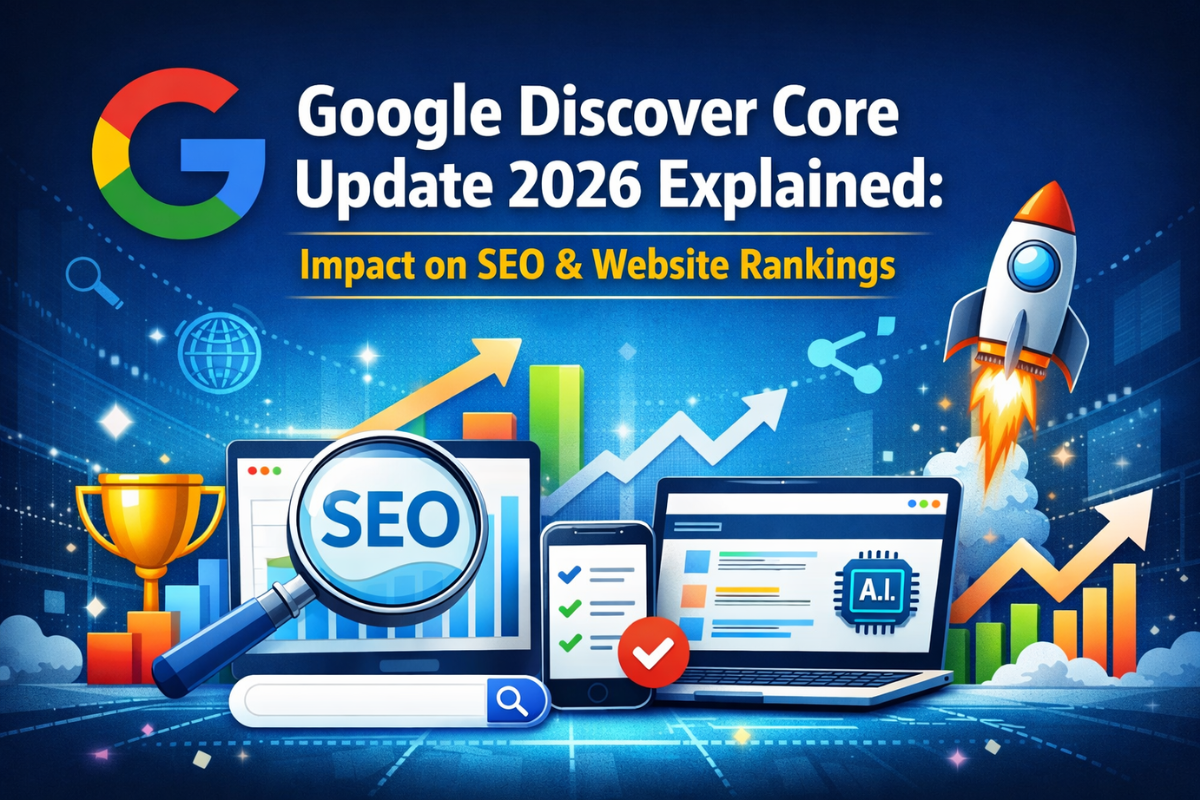
Are you struggling to understand what Google's February 2026 Discover Core Update actually changed — and what it means for your website traffic? You're not alone. In this complete breakdown, I'm covering everything: what changed, who got hit, who gained ground, and exactly what to do right now to adapt your content strategy.
Feb 5
Update Launched
22
Days to Complete
Feb 27
Rollout Finished
#1st
Discover-Only Update Ever
S
SEO Content Team
🏆 5+ Years Tracking Google Algorithm Updates · Verified SEO Practitioners
This article is based entirely on the official Google Search Central announcement and cross-referenced with real post-rollout industry data from NewzDash and Moz. No speculation — only verified findings.
🔍 What Is Google's February 2026 Discover Core Update?
On February 5, 2026, Google launched something it had never done before — a core algorithm update targeting Google Discover specifically. Not organic search. Not traditional rankings. Discover — the personalised content feed shown on Android home screens, in the Google app, and on mobile browsers.
For many publishers, Discover had quietly become their single largest traffic source over the past two years, surpassing organic search in raw volume. That's exactly what makes this update genuinely significant and worth your full attention.
💡
What Is Google Discover?
Google Discover is the personalised content feed in the Google app, on Android home screens, and at google.com on mobile. It surfaces articles, videos, and stories based on your browsing history, search activity, and interests — without any search query needed. For many publishers it now drives more traffic than traditional Google Search.
What makes this historically unique is that Google publicly labelled it as a Discover-specific update — separating it from their traditional web search core updates for the very first time. The message from Google is clear: Discover should feel like a curated, personalised magazine — not a feed of sensational headlines engineered to trick you into clicking.
This update is currently live for English-language users in the United States, with a confirmed plan to expand globally to all countries and languages in the coming months. If you are outside the US right now, this is still coming for you — preparation starts today.
📅 Complete Rollout Timeline
Google estimated this would take around two weeks. It actually ran for 22 days — eight days longer than projected. Here is exactly how it unfolded:
February 5, 2026
Official Launch + Public Announcement
Google posted the announcement on Search Central Blog. Rollout began for US English users. Estimated completion: "up to two weeks."
February 8–14, 2026
First Traffic Signals Surface
Third-party trackers (NewzDash) began reporting significant movement. Sensationalist publishers showed early drops. Regionally-focused content showed early gains.
February 19–22, 2026
Extended Mid-Rollout Volatility
Rollout exceeded its initial two-week estimate. Continued publisher fluctuation. Google did not comment on the extended timeline.
February 27, 2026
Rollout Officially Complete ✅
Confirmed at 2:02 AM PT via Google Search Status Dashboard. Full 22-day rollout. Google advises comparing post-Feb 27 data against a pre-Feb 5 baseline only.
Coming Soon
Global Expansion to All Languages & Countries
Google confirmed the update will roll out globally. No specific date announced yet. Prepare your content strategy now regardless of your location.
⚠️
Important: Compare the Right Data
Always compare your post-rollout Discover performance against data from before February 5 — never against mid-rollout data. Comparing during an active rollout will give you false conclusions about what actually changed on your site.
⚙️ 3 Core Algorithm Changes Google Made
Google described this as a broad improvement to "systems that surface articles in Discover." Based on the official announcement and confirmed industry analysis, here are the three fundamental changes under the hood:
1
🌍 Stronger Local & Geographic Relevance
Google now significantly weights whether the publishing website is geographically relevant to the reader. Indian readers will see more content from Indian publications. US readers will see more US-originated stories. International publishers targeting foreign audiences may see a dip in those markets — but stronger performance in their home country once global expansion hits. Geographic authenticity is now a real, measurable signal.
2
🚫 Directly Targeting Clickbait & Sensationalism
Google is algorithmically demoting curiosity-gap templates, sensationalised framing, and misleading headlines. Formats like "You won't believe what happened next" or "Doctors are shocked by this" now directly hurt your Discover visibility — even if the underlying article is solid. Your headline must deliver on its promise, not just manufacture curiosity. This is the most impactful change for large publishers.
3
🎯 Topic-Level Expertise Over Domain Authority
This is the biggest structural shift. Previously, a high-DA domain could rank in Discover simply because Google trusted it broadly. Now, Google evaluates expertise topic-by-topic. A niche site that consistently and deeply covers personal finance earns Discover placement for finance topics — even if it's small. But if you wrote one trending article on a topic without consistent coverage there, it won't earn sustained Discover visibility. Depth and consistency now beat broad domain authority.
📊 Who Was Affected? Winners & Losers
Not every publisher was impacted equally. Here is a full breakdown based on observed post-rollout industry data:
Publisher Type
Impact
Primary Reason
Local & regional news outlets
↑ Gaining
Geographic relevance is now a primary signal
Niche topic specialists
↑ Gaining
Consistent, deep topic coverage earns genuine authority
Health & finance sites with credentials
↑ Gaining
Demonstrable E-E-A-T now mandatory for YMYL topics
Clickbait & sensationalist publishers
↓ Losing
Curiosity-gap headlines directly targeted by the algorithm
Depends entirely on editorial quality per topic vertical
Trend-chasing viral blogs
↓ Losing
Scattered content without sustained topic depth is penalised
✅
Key Industry Insight (NewzDash Data)
Post-rollout data shows the number of unique content categories in Discover's top-100 slots increased — more topics are being covered. But publisher diversity within each category decreased. Google is concentrating impressions on a smaller, higher-credibility set of specialists per topic area.
🛠️ How to Adapt — 6 Actionable Steps
Whether you have already seen a traffic drop or you want to stay ahead of the global expansion, here is exactly what you need to do right now:
📊
Separate Your Discover Data
In Search Console, Discover and Search are separate reports. Always diagnose Discover independently — never mix the two.
01
🗂️
Build Real Topic Clusters
Pick 3–5 core topics and publish consistently within them. Twenty deep articles in one niche beats fifty scattered posts.
02
✏️
Audit Every Headline
Replace curiosity-gap titles with clear, editorial-quality headlines. Your title must summarise, not tease.
03
🖼️
Fix Your Featured Images
Minimum 1200px wide images required for Discover cards. Add max-image-preview:large meta tag to unlock full previews.
04
🏅
Strengthen Your E-E-A-T
Named authors with real credentials on every article. Linked bios. Cited primary sources. Mandatory for YMYL content.
05
⏳
Wait Before You Panic
Give at least one full week post-Feb 27 before conclusions. Compare against your pre-Feb 5 baseline only.
06
🏅 How E-E-A-T Plays Into This Update
Google's E-E-A-T framework — Experience, Expertise, Authoritativeness, Trustworthiness — has never been more directly relevant to Discover. This update effectively extends those principles from organic search evaluation into the Discover ranking system itself.
Pillar 01
Experience
Content that proves the author has personally experienced the topic performs best. First-hand accounts, real product use, hands-on testing — these outperform generic rewrites of other sources in the Discover feed.
Pillar 02
Expertise
Topic-level expertise is now the primary signal. Consistent coverage, genuine depth, and original insights — not just news rehashing. Writers with verifiable credentials who stay within their domain are rewarded most clearly.
Pillar 03
Authoritativeness
Your authority in Discover is now earned topic-by-topic. A food blog can be authoritative for recipes. A cybersecurity firm's blog can own infosec. Consistent publishing and being cited by others in your space builds this signal.
Pillar 04
Trustworthiness
Named authors, editorial transparency, fact-checked claims, primary source citations, and zero misleading content all build trust. Anonymous authorship on YMYL topics will consistently disadvantage your Discover performance.
✅
Quick E-E-A-T Checklist for Discover
Named author with linked bio on every article
Author credentials clearly stated upfront
First-hand experience or expertise noted in the content
Primary sources cited with outbound links
Last reviewed / updated date visible on the page
No anonymous or "staff writer" credits on YMYL content
❓ Frequently Asked Questions
Is this update different from a regular Google core update?
▾
Yes — this is the first time Google has publicly designated a core update as Discover-specific. Previous core updates affected both Search and Discover simultaneously. This one targets only the Discover ranking systems, meaning your organic search rankings may stay stable while your Discover traffic shifts significantly — or vice versa. Always diagnose them separately.
My Discover traffic dropped — how do I recover?
▾
Start by auditing your headlines for clickbait or sensational framing and rewriting them with clear, editorial titles. Review whether your site consistently covers specific topics in depth. Strengthen author bios and credentials, ensure images are 1200px+ wide, and add the max-image-preview:large meta tag. Recovery from core updates typically takes weeks to months — there is no overnight fix, so focus on long-term content quality improvements.
Does this update affect my organic search rankings?
▾
Not directly. This update specifically targets the Discover ranking algorithm, not Google web search. If you saw a simultaneous drop in both organic search and Discover, there may have been an overlapping change, or your site has underlying issues affecting both surfaces. Always check both reports in Search Console separately before drawing any conclusions.
I'm a small niche blogger — is there opportunity here?
▾
Absolutely — and potentially a significant one. Small niche bloggers with consistent, genuine expertise in a specific topic are exactly what this update is designed to surface more. If you've been writing original, experience-based content in a clearly defined niche with your real name attached, you may actually gain meaningful visibility as larger, sensationalist publishers lose ground.
Does this affect sites outside the US or in other languages?
▾
Not yet. The February 2026 Discover Core Update is currently live only for English-language users in the United States. However, Google has confirmed a global rollout covering all languages and countries is planned. If you publish in Hindi, Spanish, French, or any other language, now is the ideal time to prepare by applying the same content quality and E-E-A-T principles to your publishing strategy.
🎯 Final Verdict — The Big Picture
Let me be completely direct with you: this is not a routine quality tweak. It represents a genuine architectural shift in how Discover works. For years, many publishers built their Discover strategy around chasing trending topics, writing emotionally charged headlines, and publishing high volumes of content regardless of depth. That playbook is now being algorithmically retired.
The publishers who will win in Discover going forward are those who:
Define a clear topic area and cover it consistently and deeply
Write with genuine expertise and real first-hand insight
Present themselves with transparent, credentialled authorship
Prioritise long-term reader satisfaction over short-term click optimisation
Publish content that feels like it was written by a real human, not assembled from trending topics
If you have already been building your strategy this way — with real expertise, honest writing, and genuine value for your audience — this update is a reward for you, not a punishment. If your strategy has relied on volume and sensationalism, the time to pivot is right now, before the global expansion reaches your market.
✅ Key Takeaways at a Glance
Save this before you leave — everything you need to remember from this update in one place.
🗓️ Feb 5 – Feb 27, 2026🇺🇸 US English First🚫 Clickbait Penalised🎯 Topic Expertise Rewarded🌍 Local Relevance Boosted🏅 E-E-A-T Critical🌐 Global Rollout Coming📸 1200px Images Required🔍 Separate from Search Rankings
Digital Marketing & Search Strategy Specialists · 5+ Years Experience
Our team has tracked Google algorithm updates and their real-world publisher impact for over five years. We specialise in Google Discover optimisation, local SEO, and content strategy for high-traffic publications. Every analysis is cross-referenced against official Google documentation and third-party tracking data before publication.